
Menu

SEO and AI search platform

SEO and AI search tools for one connected strategy

Research demand, track rankings, connect Search Console, measure AI visibility, optimize content, and turn the next opportunity into review-ready work with Lantern.

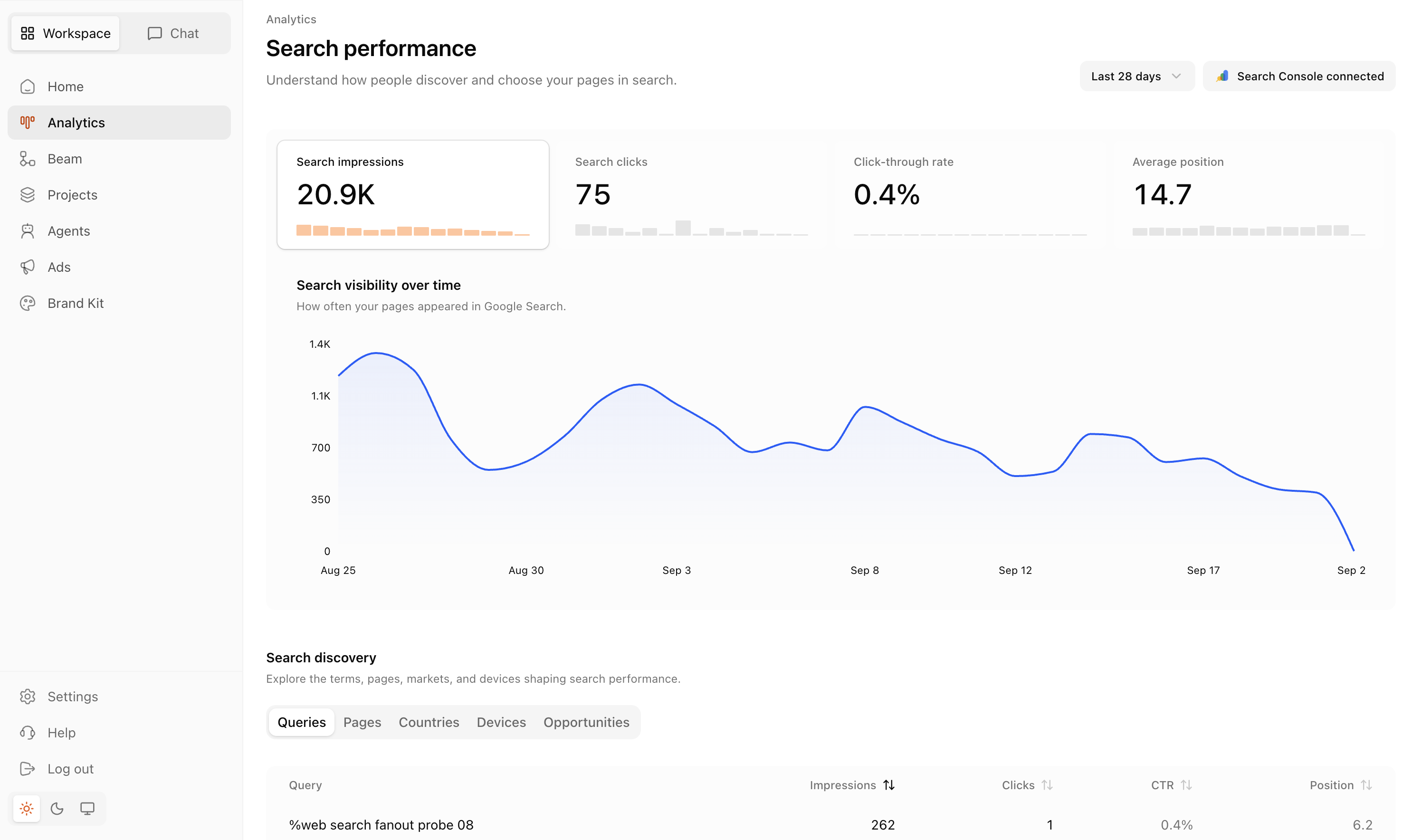
Lantern SEO and AI search analytics showing queries, pages, rankings, and performance

Understand discovery across

Google SearchChatGPTGeminiPerplexityClaude

Search has expanded

What is AI SEO?

AI SEO improves how a brand is discovered across traditional search results and AI-generated answers. It adds prompts, mentions, citations, answer accuracy, recommendation position, and AI referral traffic to the rankings, clicks, pages, and technical signals SEO teams already use.

Lantern brings those signals together so teams can understand demand, see why competitors win, and prioritize work that improves visibility across both search experiences.

Connected SEO tools

One workspace from research to reporting

Replace disconnected exports and generic prompts with a workflow where traditional SEO and AI-search evidence inform the same priorities.

/01

Capability group

Rankings & research

Track where you rank, discover what to target next, and connect the data sources that matter — all in one place.

Rank Tracker

Track keyword rankings over time and connect Google Search Console to ground movement in real impressions, clicks, queries, and page data.

Keyword Research

Discover high-impact keywords, cluster them by search intent, and map them directly to your content pipeline. Filter by volume, difficulty, and AI citation potential.

Search Console Integration

Pull GSC data into Lantern to see rankings, impressions, and clicks alongside AI visibility metrics. Make every decision with real performance data behind it.
/02

Capability group

Content optimization

Create and optimize content that wins in both traditional search and AI-generated answers — without increasing headcount.

Content Agent

Research, brief, and draft SEO content using your brand knowledge and search evidence, then return the work to your team for review and publishing.

On-Page Optimizer

Analyze your pages against top-ranking competitors and get prioritized recommendations to close gaps in rankings, readability, structured data, and internal linking.

Content Gap Finder

Surface topics and queries where competitors earn search traffic that you don't. Prioritize each gap by opportunity size and the content effort required to close it.

/03

Capability group

Reporting & insights

Give every stakeholder a clear view of SEO performance — from rankings and traffic to content output and ROI.

Performance Dashboard

Track organic rankings, traffic, and content output from one dashboard. Connect Google Analytics to compare search visibility with real website outcomes.

Google Analytics Integration

Sync GA4 to link content performance to traffic, engagement, and conversion data. See which pages are genuinely driving results — not just rankings.

Share of Voice Report

Generate clear, boardroom-ready reports showing how your organic presence compares to competitors across traditional and AI search engines.

A continuous optimization loop

Move from search evidence to measurable improvement

  1. /01

    Measure demand and visibility

    Start with rankings, queries, pages, AI answers, citations, competitors, and referral traffic.

  2. /02

    Prioritize the right gap

    Compare commercial relevance, current authority, competitive difficulty, and the evidence needed to win.

  3. /03

    Create or improve the asset

    Build a brief, refresh a page, answer missing questions, strengthen sources, or produce new content.

  4. /04

    Review, publish, and learn

    Approve the work, send it to your existing systems, and measure how search visibility changes.

SEO agent execution

Turn the opportunity into finished work

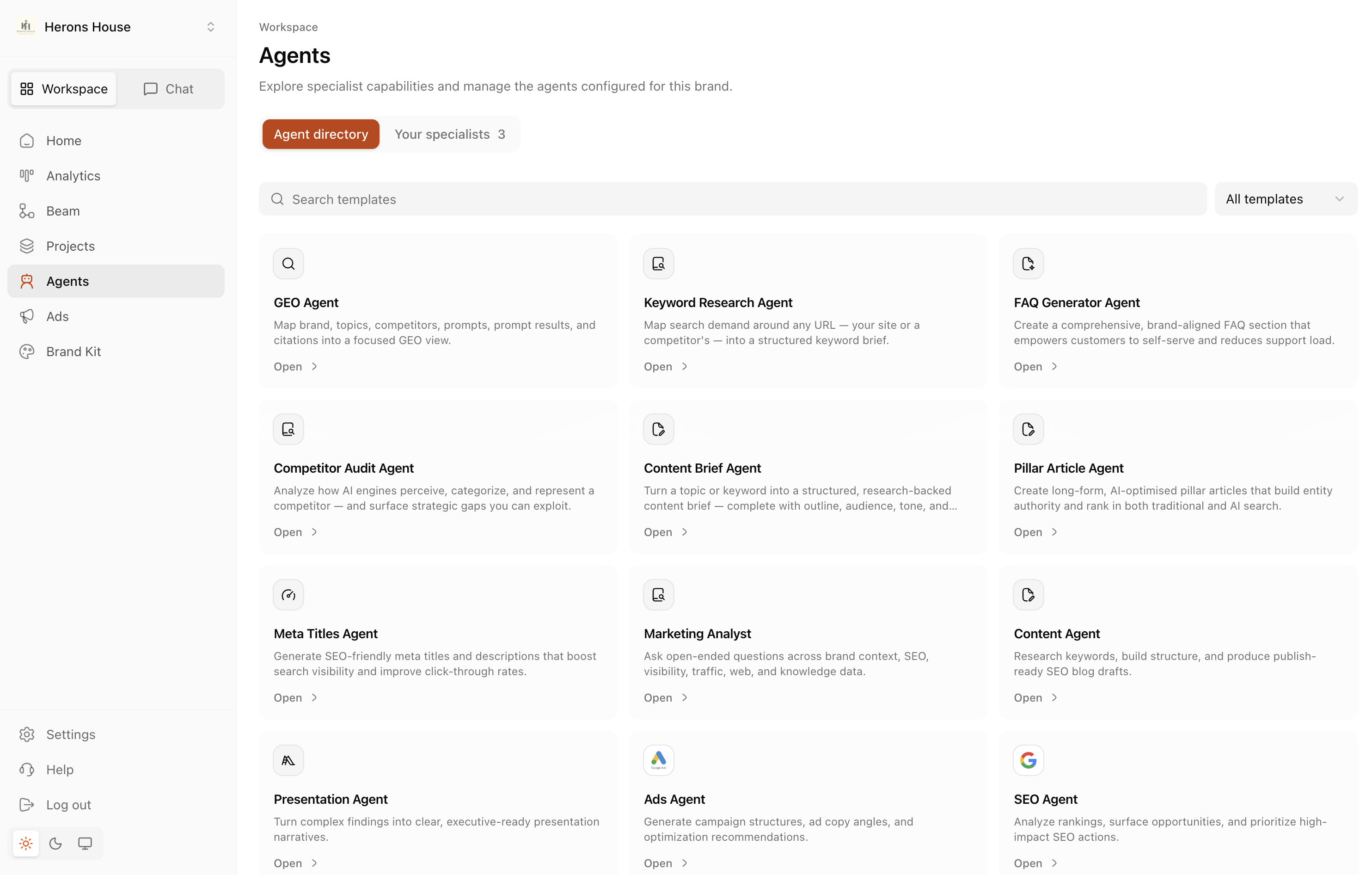
Deploy specialized agents for query research, competitor audits, content gaps, briefs, articles, FAQs, and optimization.

  • Defined job and structured output
  • Shared brand, audience, and product context
  • Human review before publishing or consequential changes
Explore AI marketing agents
Lantern AI SEO agent directory for research, content, audits, and optimization

SEO and AI search

Different surfaces, shared foundations

The metrics differ, but both programs depend on content that systems can access, understand, trust, and connect to real audience demand.

01 / Ranked results

Traditional SEO

Demand
Keywords, queries, intent, and search volume
Visibility
Rankings, impressions, clicks, and search features
Optimization
Technical SEO, links, metadata, content, and site architecture
Outcome
Qualified organic visibility and website traffic

02 / Generated answers

AI search optimization

Demand
Conversational prompts, journeys, and recommendation questions
Visibility
Mentions, citations, recommendation position, and share of voice
Optimization
Answer clarity, entities, factual support, authority, and citability
Outcome
Accurate inclusion in AI answers and attributable referral traffic

Shared foundation

What both systems need

  • Accessible pages
  • Useful content
  • Clear entities
  • Credible evidence
  • Topical authority

Go deeper

Build a complete search visibility program

AI search visibility

Measure where your brand appears in AI answers

Track mentions, citations, competitors, recommendation position, and the prompts influencing discovery.

Explore ai search visibility

AEO guide

Understand answer engine optimization

Learn how answer engines select, summarize, and cite information, and where AEO extends traditional SEO.

Explore aeo guide

GEO guide

Build a generative engine optimization strategy

See how content, entities, authority, retrieval, and citations affect visibility in generative search.

Explore geo guide

SEO and AI search FAQ

Questions about AI SEO tools

Clear answers about traditional SEO, AI search optimization, data, and agent workflows.

What is an AI SEO tool?

An AI SEO tool helps teams understand and improve discovery across traditional search results and AI-generated answers. It combines familiar SEO signals such as queries, rankings, pages, links, and traffic with AI-search signals such as prompts, mentions, citations, recommendation position, and competitive share of voice.

How is AI SEO different from traditional SEO?

Traditional SEO focuses on crawlability, rankings, organic clicks, and search-result performance. AI SEO also measures whether answer engines can understand, retrieve, trust, summarize, mention, and cite your brand.

Does AI search optimization replace SEO?

No. AI search optimization extends a strong SEO program. Technical accessibility, useful content, clear site architecture, credible sources, entity consistency, and authority remain important across both ranked results and conversational answers.

What SEO data can Lantern connect?

Lantern can connect Google Search Console query and page performance, Google Analytics traffic and engagement data, and Lantern's own AI visibility, citation, competitor, prompt, and content workflow data.

Can Lantern help with keyword and AI query research?

Yes. Lantern helps teams research traditional keyword demand and the conversational questions people ask AI systems, then connect that demand to intent, current visibility, competitor coverage, and a prioritized content plan.

Which AI search engines can Lantern monitor?

Lantern monitors major AI discovery surfaces including ChatGPT, Gemini, Perplexity, Claude, and Google AI Overviews. Coverage can vary by market and program configuration.

How do Lantern's SEO agents work?

Lantern agents begin with search evidence and shared brand context, then follow a defined workflow for research, auditing, briefing, drafting, or optimization. They return structured work for marketers to review, revise, approve, and publish.

From visibility to action

Make your next marketing move with evidence.

Connect your brand context, understand where demand is moving, and put specialized agents to work on the opportunities that matter most.

Start my free trial