Intelligence
01Search and AI visibility data
Start workflows from keyword demand, prompt coverage, rankings, competitors, citations, cited sources, and referral traffic.
Content engineering platform
Lantern gives content engineers one platform for search intelligence, brand context, specialized agents, human review, connected delivery, and performance feedback.
A systems discipline
Content engineering is the practice of designing the structured system used to plan, create, govern, deliver, and improve content. A content marketer may produce an asset. A content engineer designs the reusable context, workflow, controls, integrations, and feedback loop that make reliable production possible.
The role sits between editorial strategy, content operations, data, and technical implementation. It does not remove writers, editors, strategists, or subject-matter experts. It gives their judgment a stronger operating system.
In the agentic era, that system also defines what agents can do, which evidence they use, what a valid output contains, and where a person must review or approve the work.
The content operating system
Content engineering replaces fragile handoffs with a defined path where context and evidence travel with the work.
Combine search queries, AI prompts, citations, competitors, traffic, and first-party priorities.
Give every workflow the same positioning, audience, products, voice, approved knowledge, and constraints.
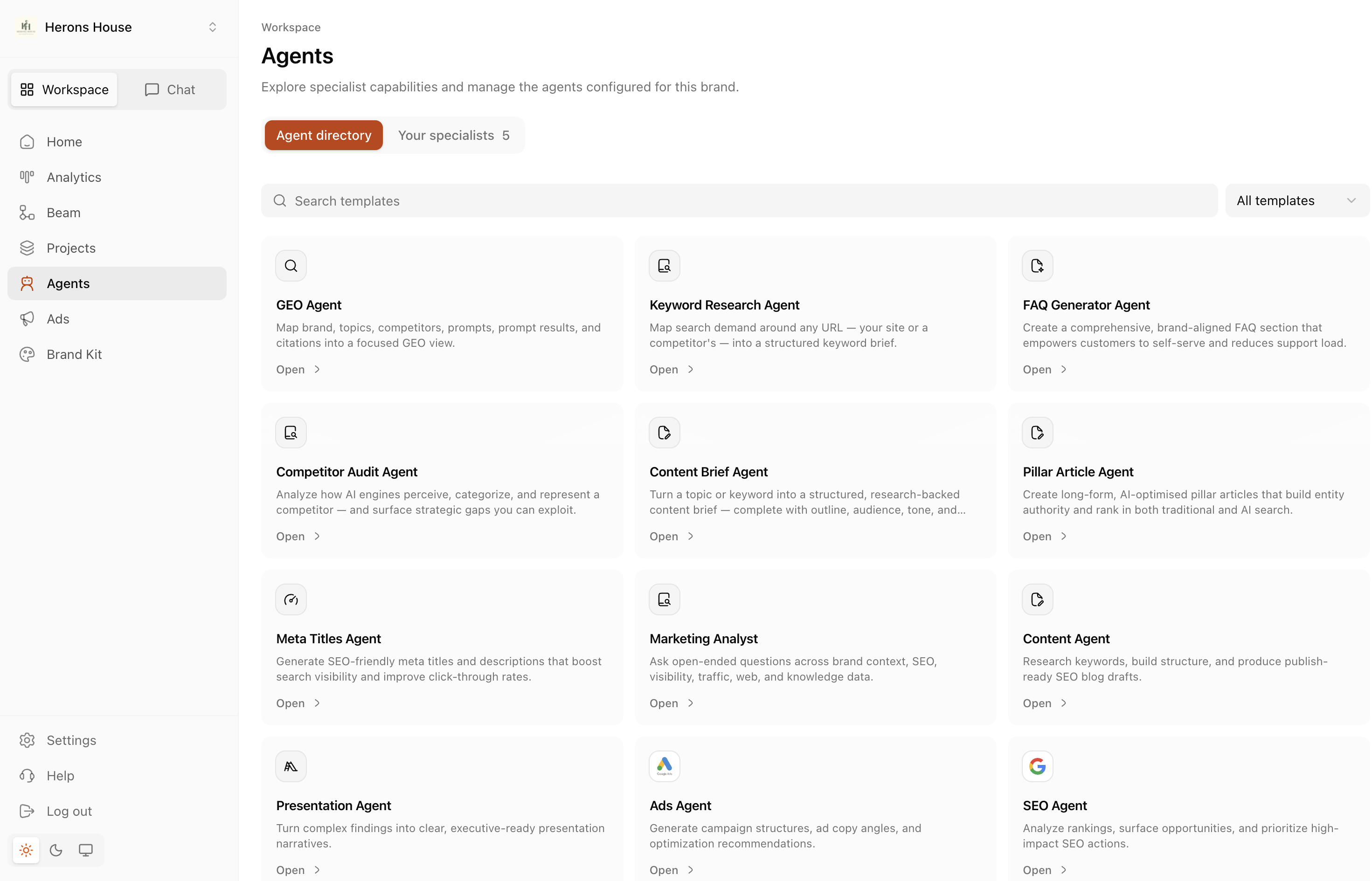
Choose a specialized workflow for research, auditing, briefing, drafting, optimization, or reporting.
Inspect evidence and output, request changes, and apply the right human checkpoint before consequential actions.
Send approved work into the CMS, CRM, or collaboration systems already used by the team.
Connect rankings, AI visibility, citations, traffic, and completed work to the next production decision.
Lantern for content engineers
Design the workflow once, apply shared context throughout, and keep evidence, execution, review, delivery, and measurement connected.
Intelligence
01Start workflows from keyword demand, prompt coverage, rankings, competitors, citations, cited sources, and referral traffic.
Context
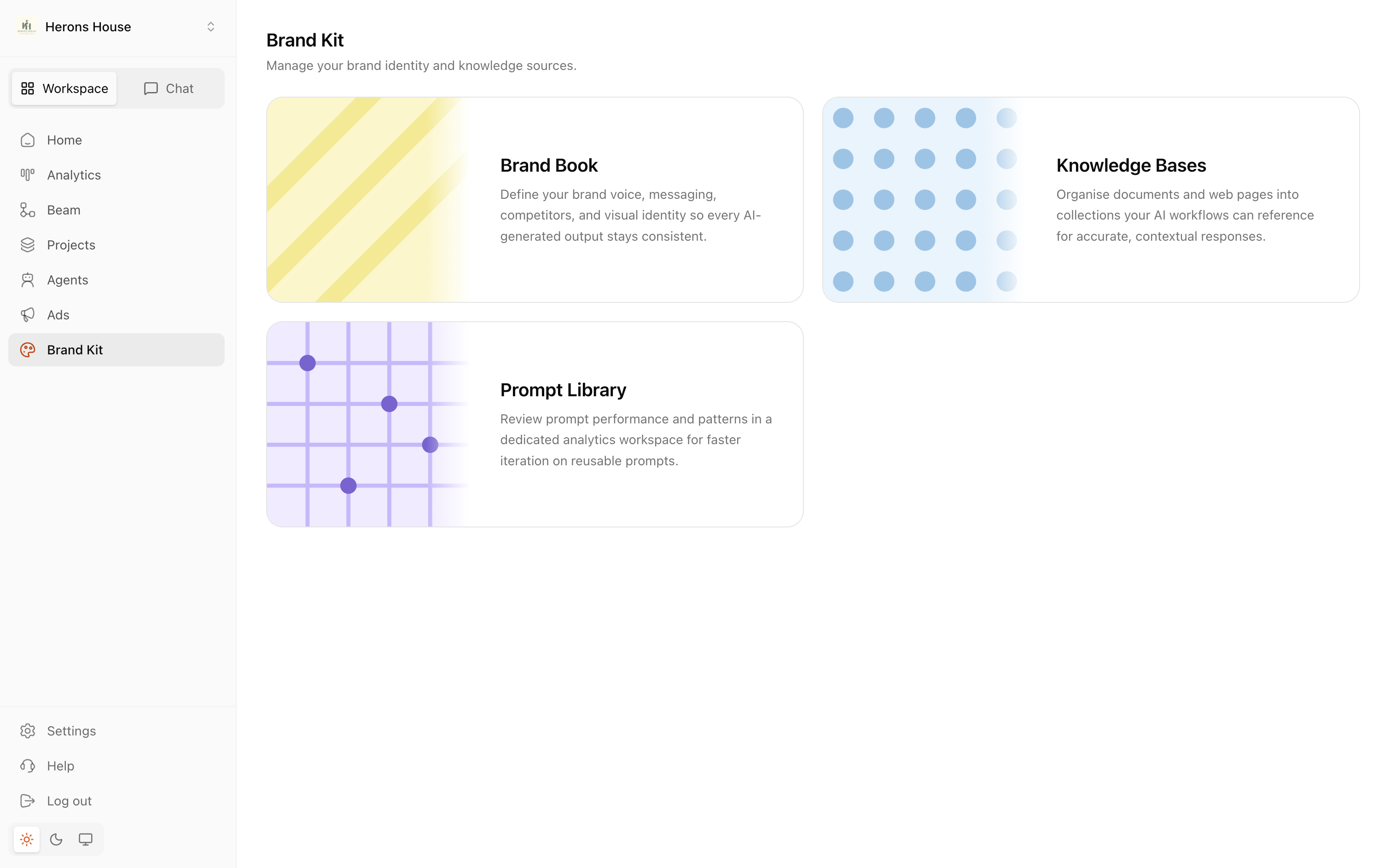
02Centralize voice, positioning, audiences, products, competitors, source material, and approved claims for every agent.
Orchestration
03Use defined workflows for research, briefs, articles, FAQs, comparisons, audits, optimization, and presentations.
Governance
04Set the objective, inspect the evidence, revise outputs, and control publishing, outreach, campaign changes, and spend.
Delivery
05Move approved work into CMS, CRM, analytics, search, and notification tools without rebuilding the entire operating stack.
Measurement
06Bring visibility, traffic, content output, and competitive movement together to inform the next workflow.
Context as infrastructure
Model positioning, voice, audiences, products, competitors, approved claims, and source material once, then make that context available across the production system.
The role in practice
The title varies by company, but the work consistently combines system design, content judgment, governance, integration, and measurement.
Map the path from opportunity to measurable outcome, define stage ownership, and decide where automation or human judgment belongs.
Turn brand guidance, audience insight, product knowledge, editorial rules, and source material into context every workflow can use.
Specify what a useful brief, audit, draft, optimization, or report must contain so quality does not depend on an open-ended prompt.
Establish evidence requirements, review gates, permissions, escalation paths, and approval rules before workflows operate at scale.
Integrate search data, analytics, brand knowledge, agents, collaboration, CMS delivery, and reporting into a stable operating model.
Track throughput, revisions, visibility, traffic, citation outcomes, and quality signals to decide what the system should do next.
A complementary role
Content engineering does not replace marketing or strategy. It creates the operational system that helps both disciplines work with more consistency and leverage.
| Area | Content marketer | Content strategist | Content engineer |
|---|---|---|---|
| Primary question | What should we create? | What should we prioritize and why? | What repeatable system produces and improves it? |
| Main artifact | Campaigns and content assets | Plans, narratives, and editorial direction | Workflows, context, controls, integrations, and feedback loops |
| Use of AI | Assistance with individual tasks | Research and decision support | Governed execution across connected stages |
| Success measure | Asset and campaign performance | Portfolio and audience impact | Quality, throughput, reuse, governance, and measurable outcomes |
Reusable production
Use a shared evidence and governance layer across the recurring assets your search and content programs need.
Connected delivery
Connect search data, analytics, content systems, team alerts, and approved delivery without forcing the organization into one monolithic tool.
Explore integrations Google Search ConsoleSEO & Search
 Google AnalyticsAnalytics
 SanityCMS
 ContentfulCMS
 WordPressCMS
 HubSpotCRM
 SlackNotifications
Content engineering FAQ
Direct answers about content engineering, content operations, AI workflows, and Lantern.
Content engineering is the practice of designing the structured systems, reusable context, workflows, controls, integrations, and feedback loops used to plan, create, govern, deliver, and improve content. The focus is the production system rather than one individual asset.
A content engineer maps workflows, models brand and product context, defines output requirements, configures agents and tools, connects systems, establishes review gates, and measures how the content system performs. The role combines editorial judgment, systems thinking, data, and AI orchestration.
Content marketing focuses on creating and distributing useful content for an audience. Content engineering focuses on the reusable system that supports that work: data inputs, structured context, workflows, governance, integrations, and measurement. One person or team may practice both disciplines.
Content operations coordinates people, processes, calendars, tools, and governance. Content engineering goes deeper into how reusable context, structured outputs, integrations, agents, and performance data are designed into the production system. The two disciplines are complementary.
No. Generating a draft is one possible step. A content engineering system also covers opportunity selection, research, source requirements, brand context, output structure, review, permissions, delivery, and measurement. Faster generation without those controls can scale inconsistency rather than quality.
Lantern connects search and AI-visibility evidence, shared brand knowledge, specialized marketing agents, human review, publishing integrations, and performance reporting in one workspace. Content engineers can use those layers to design governed, repeatable workflows without replacing every system in their stack.
Lantern can connect workflows to publishing systems, but publishing should follow the permissions and approval process configured by the team. Content engineers decide where human review is required and which actions an agent is allowed to prepare or complete.
From visibility to action
Connect your brand context, understand where demand is moving, and put specialized agents to work on the opportunities that matter most.
Start my free trial