Measurement
01AI visibility reporting
Measure brand mentions, citations, share of voice, competitors, and answer accuracy across the AI platforms your buyers use.
AI marketing agent platform
Lantern connects AI-search visibility, SEO performance, brand knowledge, and specialized agents so your team can move from evidence to review-ready marketing work in one workspace.
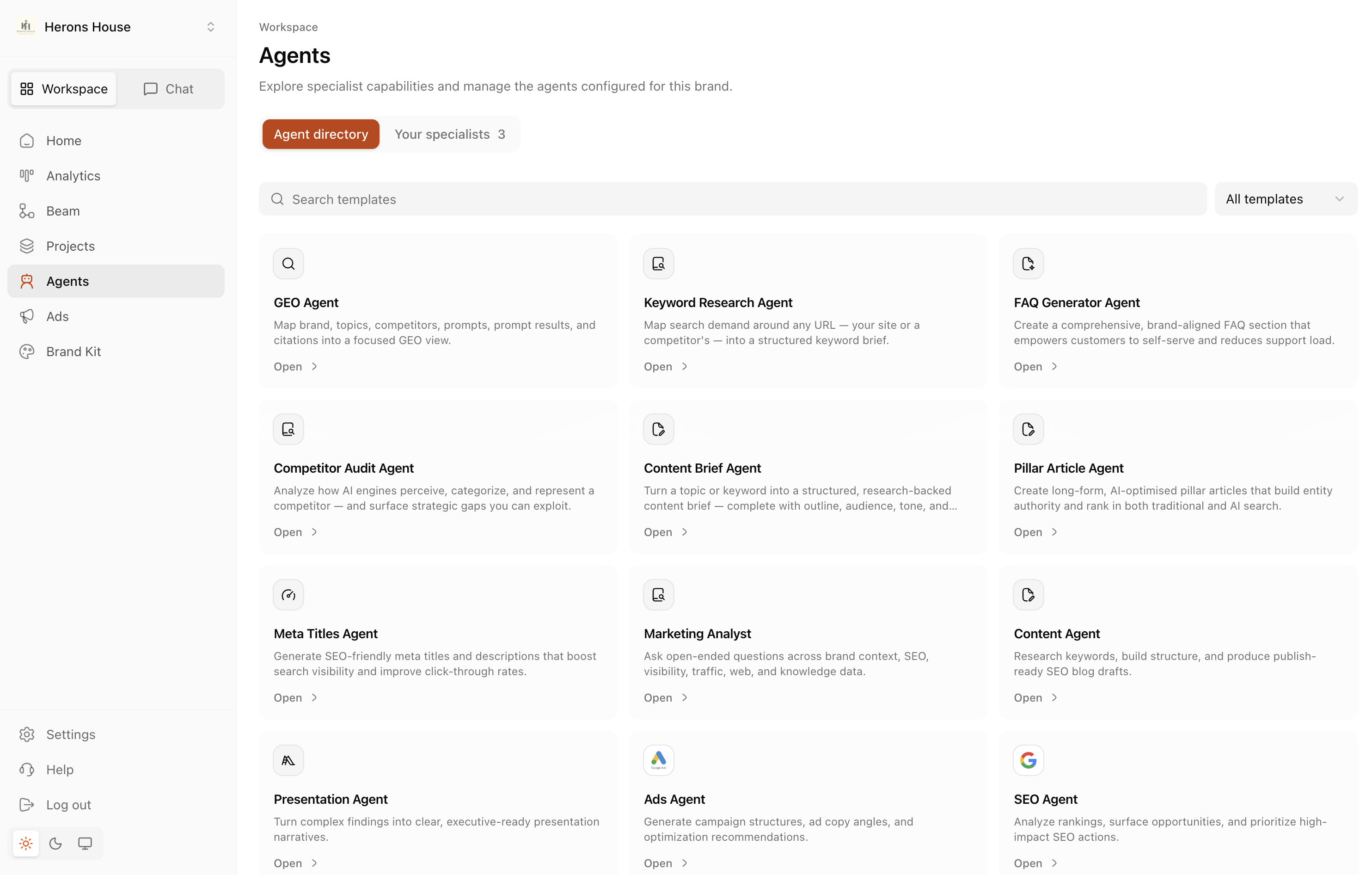
Purpose-built execution
An AI marketing agent is a specialized system that follows a defined workflow to complete a specific marketing job. It can gather context, use connected data and tools, execute multiple steps, and return a structured result.
Lantern agents are not generic chatbots working from isolated prompts. They share your brand knowledge and begin with evidence from AI search, organic search, competitors, citations, and your own performance data.
The goal is controlled execution: more capacity for repeatable research and production work, while marketers retain strategy, judgment, and approval.
How AI marketing agents work
Each specialist owns a stage, carries the same evidence and brand context forward, and hands a defined output to the next step. Your team directs the loop.
Agents start with live AI-search, SEO, competitor, citation, and first-party performance signals instead of a blank prompt.
Stage output
Live market evidence
They compare the evidence with your goals and brand context to identify the work most likely to improve discovery and authority.
Stage output
Ranked next actions
A specialized agent researches, plans, drafts, optimizes, or audits the work using a repeatable process and a clear output contract.
Stage output
Structured marketing work
Your team reviews the evidence and output, requests changes, and controls publishing, outreach, campaign changes, and spend.
Stage output
Approved handoff
Shared context at every stage
Brand knowledge Audience and product context Goals and performance data Permissions and review rules
Specialized workflows
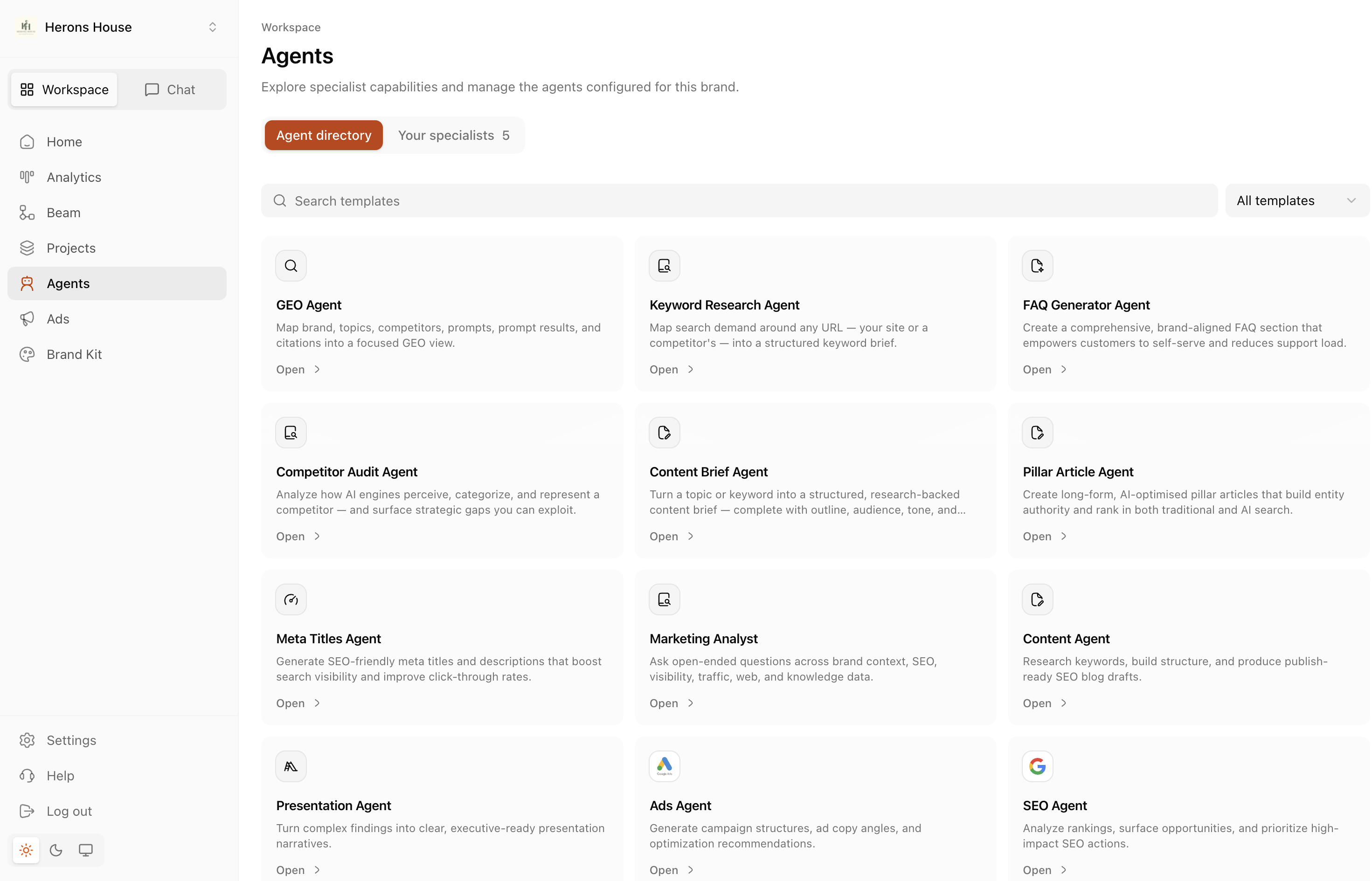
Deploy the workflow you need, with a defined job and output instead of another open-ended conversation.
Measurement
01Measure brand mentions, citations, share of voice, competitors, and answer accuracy across the AI platforms your buyers use.
Research
02Investigate why competing brands are recommended, which sources influence answers, and where your strongest opportunities sit.
Planning
03Map traditional search demand and conversational AI prompts into a prioritized research plan for your market.
Strategy
04Turn verified gaps into structured briefs with audience, intent, evidence, source, internal-link, and review requirements.
Production
05Produce grounded drafts, pillar pages, FAQs, comparison content, and supporting assets from approved research and brand context.
Governance
06Check claims, statistics, sources, attribution, and brand alignment before work moves toward publishing or distribution.
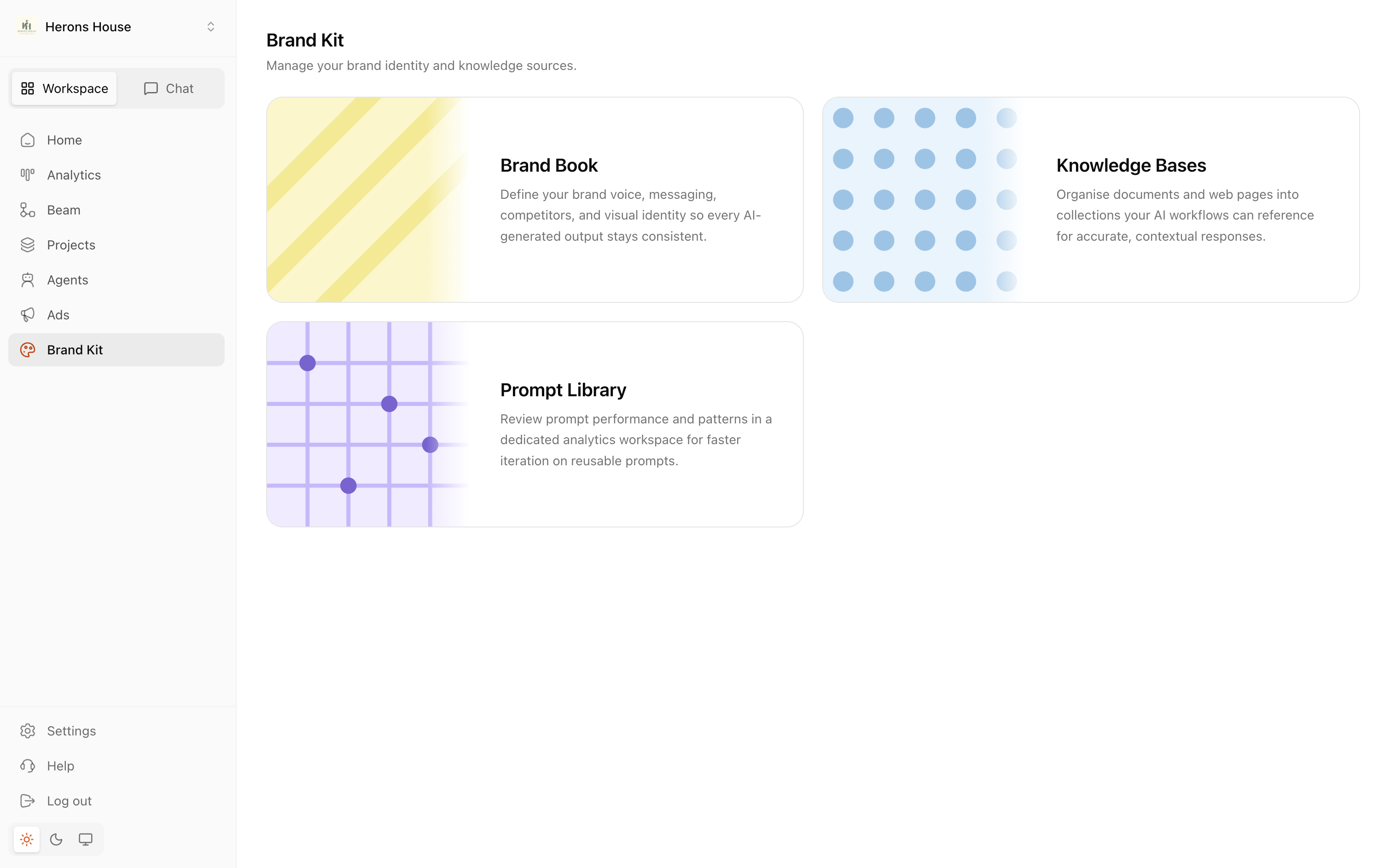
Shared brand intelligence
Give agents the context they need once, then apply it across research, planning, creation, and review.
Autonomous, not uncontrolled
Agents can complete multi-step work and prepare outputs at scale. People remain responsible for direction, quality judgment, and consequential decisions.
Configure the workflow, review the evidence, revise the result, and approve publishing, outreach, campaign changes, or spend according to your operating model.
Compare Lantern plansConnected execution
Bring performance signals into Lantern, run a specialized workflow, and move approved work into the systems your team already uses.
Explore all integrations01 / Connected evidence
 Google Search ConsoleSEO & Search
 Google AnalyticsAnalytics
 Google AdsAdvertising
 ChatGPT AdsAdvertising
02 / Lantern agents
Research, prioritize, create, optimize, and audit with your brand context and review rules applied throughout.
Human checkpoint
Review, revise, and approve
03 / Approved handoff
 SanityCMS
 ContentfulCMS
 WordPressCMS
 HubSpotCRM
 SlackNotifications
AI marketing agent FAQ
Clear answers on workflows, brand context, control, and the role of your team.
An AI marketing agent is a specialized system that follows a defined workflow to complete marketing work such as research, analysis, planning, drafting, or optimization. Unlike a general chatbot, an agent works toward a specific outcome using available context, data, and tools.
Lantern agents combine AI-search visibility, SEO performance, competitor evidence, citation sources, and your brand knowledge. Each agent follows a specialized workflow, produces a structured output, and returns the work to your team for review.
Lantern agents support AI visibility reports, competitor audits, keyword and query research, content briefs, pillar articles, FAQs, content refreshes, SEO recommendations, presentations, advertising preparation, and trust QA.
Lantern can connect agent workflows to publishing and distribution systems, but consequential actions should follow your configured permissions and approval process. Your team controls whether and when content, outreach, campaigns, or spend go live.
Agents use shared brand context including positioning, voice, audiences, products, approved claims, source material, and guidelines. That context is applied throughout the workflow rather than added only after a draft is produced.
No. They add research and execution capacity for repeatable work. Marketers still set strategy, choose priorities, judge quality, redirect workflows, and approve actions with external or hard-to-reverse consequences.
From visibility to action
Connect your brand context, understand where demand is moving, and put specialized agents to work on the opportunities that matter most.
Start my free trial