ChatGPT Instant Checkout: What Changed in 2026
OpenAI shifted ChatGPT Instant Checkout towards product discovery in March 2026. Learn what changed and how brands can improve their AI shopping visibility.
On this page
On this page
ChatGPT still matters for shopping because it can shape what buyers compare before they reach a product page. OpenAI launched Instant Checkout in September 2025, then shifted its focus toward product discovery in March 2026. Brands now need to treat ChatGPT as a discovery layer, not just a checkout channel.
Here is what changed, what still works, and what brands should do next.
Key takeaways
- OpenAI launched Instant Checkout in September 2025 and shifted its focus toward product discovery in March 2026.
- Product discovery and checkout are separate. Appearing in ChatGPT shopping does not automatically mean customers can purchase directly through ChatGPT.
- Product feeds should include complete descriptions, current pricing, availability, product identifiers, and high quality images.
- Shopify and Etsy merchants should check their platform’s current requirements, while businesses with custom platforms may need additional technical integration.
- Discovery still matters because ChatGPT can help shoppers compare products before they visit a merchant’s site or app.
- Brands should track which products appear in AI shopping results and which queries surface competitors instead.
What was ChatGPT Instant Checkout?
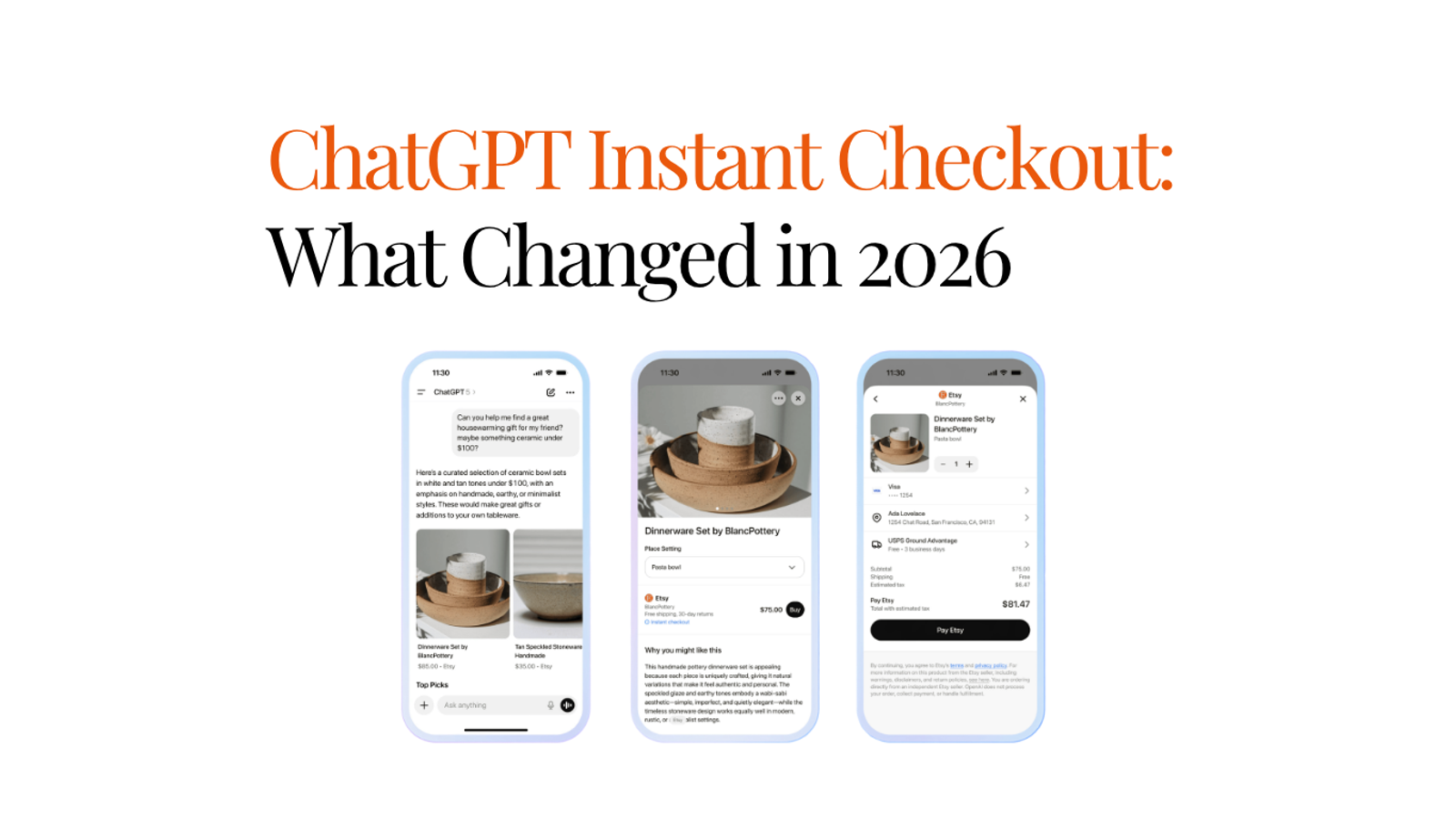
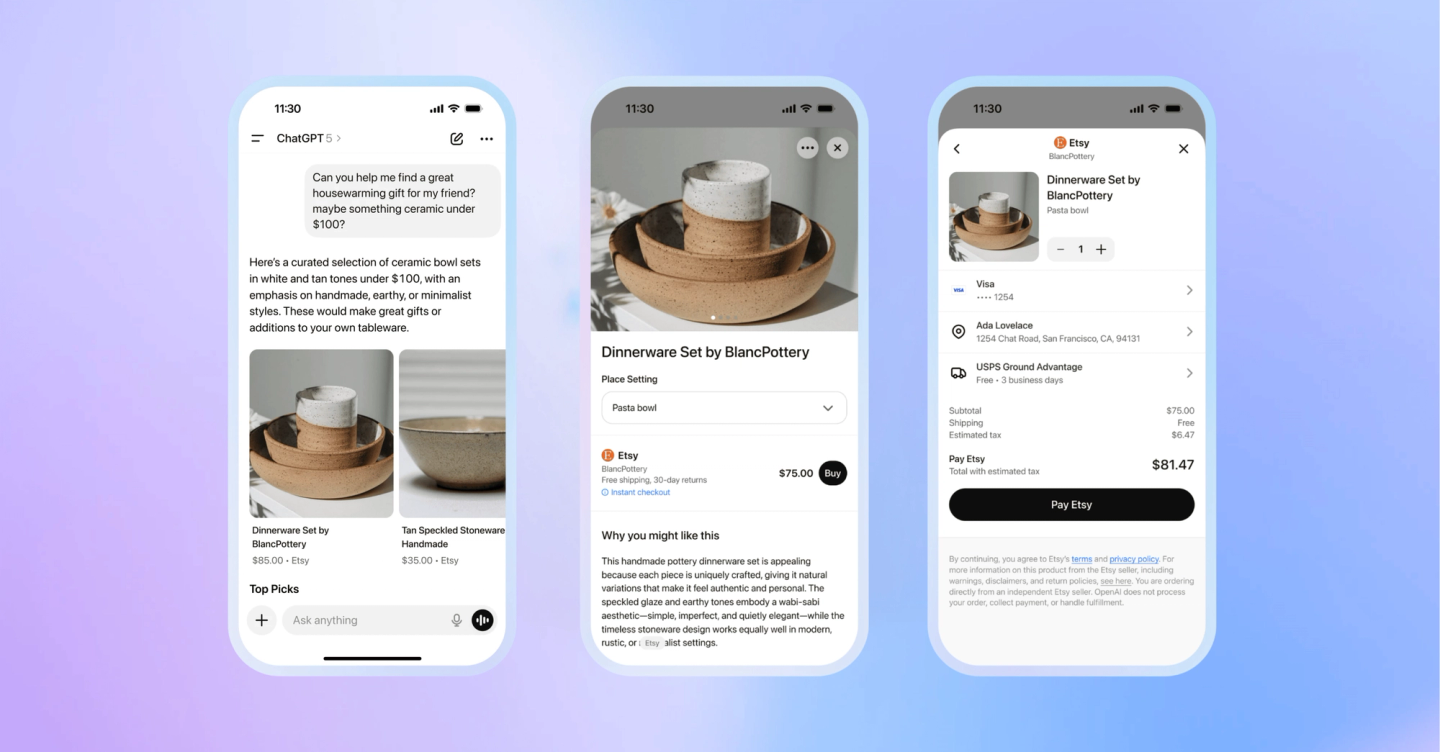
ChatGPT Instant Checkout was a shopping feature launched in September 2025 that allowed users to purchase physical products directly inside a ChatGPT conversation without visiting a merchant’s website.
OpenAI launched the feature with Etsy sellers, with Shopify merchants scheduled to follow. When a user submitted a prompt such as “What is the best running shoe for marathon training?”, ChatGPT could display product cards with images, prices, reviews and a Buy button.
Payments were processed through supported payment infrastructure. The merchant remained the merchant of record and handled order fulfillment and relevant customer service. Instant Checkout initially supported single-item purchases for eligible U.S. users on Free, Plus and Pro plans.
Why did OpenAI shift away from Instant Checkout in 2026?
In March 2026, OpenAI shifted its focus from Instant Checkout towards product discovery giving shoppers more flexibility to explore products while allowing merchants to use their own checkout experiences.
Early adoption was also limited, as merchants had to integrate a new checkout experience while giving up some control over the buying process. Walmart’s results showed another challenge. The company reported that checkout inside ChatGPT converted three times lower than click-through to Walmart.com. Walmart AI executive Daniel Danker attributed part of the gap to the single-item limit, according to eMarketer.
The practical result is clear: ChatGPT remains useful for discovery, but merchants still need control over checkout, customer relationships, loyalty and the post-purchase experience.
How This Differs From Traditional E-commerce
In traditional e-commerce, discovery happens on Google or social, the user clicks through to a product page, navigates checkout, and completes payment on the brand’s site. In ChatGPT commerce, the conversation can bring product discovery and comparison together, while checkout may still happen on the merchant’s website or app.
This is different from Google Shopping or Amazon, where shoppers often click through to product pages to compare options. In ChatGPT shopping, the conversation can help shoppers narrow their choices before visiting a retailer.
This shift changes buyer psychology and brand strategy in several ways:
Immediacy can reduce friction in the buying process.
Conversational commerce can reduce the steps between interest and purchase. When someone can buy through a supported checkout without switching apps or re-entering payment details, the process may be more convenient.
How to Show Up in ChatGPT Shopping
1. Audit Your Product Data for AI Readiness
Before integrating with ACP, evaluate whether your product catalog meets the structural and content requirements ChatGPT needs to surface your products and support checkout where available.
- Completeness: Every product should have a unique ID, title, description, price, availability status, product URL, image URL, brand, and seller details. Check the Product Feed Spec for the full list of required fields.
- Accuracy: Keep pricing and inventory current. Update product information when prices or availability change to reduce out-of-stock and price-mismatch issues.
- Natural language quality: Descriptions should use clear, conversational language that explains features, benefits, and use cases.
- Rich attributes: Include product variants such as size and color, GTINs, taxonomy categories, reviews, and shipping details where supported. These details can help shoppers assess product relevance and suitability.
- Checkout enablement: Check the
enable_searchandenable_checkoutswitches in your settings. Being found in search and letting customers buy items are completely separate features. Turning both switches on will not activate the purchase feature without secondary backend validation.
2. Implement the Agentic Commerce Protocol
For Shopify and Etsy merchants, integration may be managed through the platform’s existing tools.
For custom platforms or enterprise catalogs, you will need to:
- Build a product feed using a supported delivery method and format. Follow the Product Feed Spec for the required fields and file formats.
- Implement checkout REST APIs if you want to support eligible in-ChatGPT checkout. These include POST /checkout_sessions, POST /checkout_sessions/{checkout_session_id}, and POST /checkout_sessions/{checkout_session_id}/complete. The APIs must validate availability, calculate taxes and shipping, and return the current cart state.
- Configure webhooks to send order lifecycle updates to ChatGPT so order information stays up to date.
- Integrate payment processing through a supported payment provider. Follow the Agentic Checkout Spec for payment and security requirements.
The ACP documentation provides sample payloads, endpoint schemas, and guidance for production-ready implementations.
3. Optimize for Trust and Recommendation Signals
Technical integration alone does not guarantee visibility.
- Collect and display authentic reviews on platforms such as G2, Trustpilot, Reddit, and industry forums.
- Maintain consistent, accurate product information across all channels, including pricing, specifications, and availability.
- Use high-quality product images that clearly show the item, its features, and context of use.
- Provide transparent policies for shipping, returns, and customer support, and make this information easy to find.
- Respond promptly to customer inquiries to provide helpful support.
- Keep product information updated when prices or seasonal offerings change.
4. Monitor and Iterate
Once live, track how your products perform in ChatGPT shopping queries:
- Which products appear most frequently in recommendations?
- Which queries trigger your items versus competitors’?
- How much website traffic and how many purchases come from ChatGPT?
- Are reviews, images, or descriptions helping shoppers evaluate your products?
Use this intelligence to refine your product feed, enrich low-performing listings, and prioritize inventory and content updates that support accurate product information and AI visibility.
Own Your Brand's AI Search Presence
Brands should not have to guess how they appear in AI search.
AI platforms increasingly influence which brands buyers discover and consider. Lantern tracks your visibility across major AI engines and puts agents to work so your brand can stay ahead.